

If your boiler pressure keeps dropping, it can be worrying, especially during the colder months when your heating is needed most. While small pressure changes are normal as the system heats and cools, a regular loss of pressure usually signals an underlying issue. Instead of just topping up the system repeatedly, it’s important to identify the cause early to prevent more serious problems.
Ignoring persistent pressure drops can lead to inefficient heating, damage to your boiler or pipework, and costly repairs down the line. Understanding why pressure drops happen and knowing what to check first can save you time, money, and keep your home warm and safe.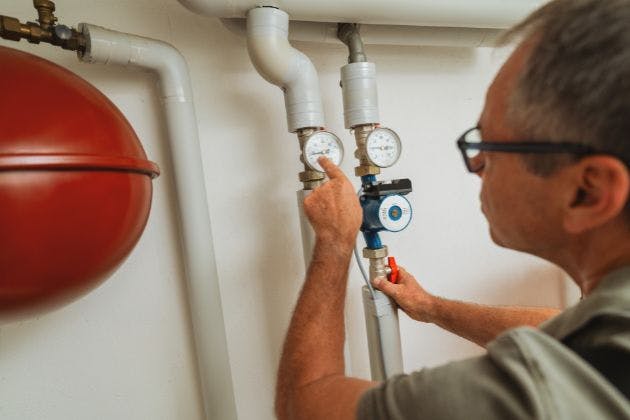
What boiler pressure is, and what is considered normal
Boiler pressure is the force of the water circulating around your central heating system. On a modern combination or system boiler, this is shown on a pressure gauge, usually on the front of the boiler or just underneath.
Most sealed systems sit around the 1.0 to 1.5 bar mark when the system is cold. As the heating runs and the water heats up, you might see this rise closer to 2.0 bar. Your manual will show the recommended range for your particular model, but staying within the green zone of the gauge is usually a good guide.
If the pressure keeps falling below the lower mark on the gauge, the boiler may lock out or display a fault code. This is a safety feature to prevent damage to the boiler.
Common reasons for boiler pressure drops over time
Boiler pressure tends not to drop for no reason. Usually, there is a small issue somewhere in the system, which gradually lets water escape or affects how the pressure is maintained.
Typical causes include minor leaks, issues with safety or expansion components inside the boiler, or recent work on the system, such as bleeding radiators. Understanding these helps you know what to look for.
Small leaks on radiators, valves and pipework
One of the most frequent causes of pressure loss is tiny leaks from radiator valves, joints on copper pipework or flexible hoses around the boiler. These can be so small that they only leave a faint stain or patch of rust rather than obvious dripping.
Over weeks or months, even a slow weep can reduce the amount of water in the system and cause repeated drops in pressure. You might notice slight corrosion around valves, green or white deposits on copper joints, or patches on nearby skirting boards.
Pressure relief valve discharge
Your boiler has a pressure relief valve (PRV) to protect the system if the pressure rises too high. If this valve lifts, it releases water through a copper pipe that usually runs from the boiler to an outside wall.
Once a PRV has opened, it can sometimes fail to reseal properly and allow small amounts of water to escape each time the boiler heats up. This regular loss of water leads to falling pressure over time.
Expansion vessel and system expansion problems
Modern boilers use an expansion vessel to absorb the expansion of water as it heats up. Inside is a rubber diaphragm with air or nitrogen on one side and system water on the other.
If the air side loses pressure or the diaphragm fails, there is nowhere for the expanding water to go. The system pressure can then rise too high when hot, causing the PRV to open and discharge water, which then shows up as low pressure when the system cools down again.
Recently bled radiators and trapped air
If you have recently bled your radiators to remove air, a drop in boiler pressure is normal. When you let air out, water moves to fill that space, so the overall system pressure falls.
This is why it is important to check the gauge after bleeding radiators and only top up the system to the recommended cold pressure. Overfilling can put extra strain on valves and the expansion vessel.
Hidden leaks under floors or in walls
In some homes, pipework runs under suspended floors, behind plasterboard or in inaccessible voids. A leak in these areas may not show up as visible damp for quite some time.
If you are topping up the system often but cannot see any obvious leaks, a hidden pipe leak is a real possibility and should be investigated by a qualified engineer.
Safe checks you can carry out before calling an engineer
There are a few simple checks most homeowners can do safely before booking a repair. Never remove boiler covers or work on gas components yourself. If in doubt at any point, stop and call a professional.
Check the pressure gauge with the system cold, then again over 24 hours
Look for damp or staining on visible pipework, valves and radiators
Inspect the PRV discharge pipe outside for drips after the heating has been on
Inspect radiators and visible pipework for damp
Start by walking around your home and looking closely at each radiator, particularly around the valves and where the pipes join. Use a torch if needed to see behind and underneath.
Feel carefully for moisture, and look for rust streaks, flaking paint or discolouration on the wall or floor nearby. Check any visible pipework around the boiler and airing cupboard as well for signs of weeping joints.
Monitor the pressure gauge over 24 hours
Note the pressure on the gauge when the system is cold, typically first thing in the morning. Then put the heating on, allow it to run for an hour or so, and check the pressure again while hot.
Finally, check the gauge again later when the system has cooled fully. A small rise and fall is normal, but a steady downward trend over a day or two suggests a leak or discharge problem somewhere in the system.
Check the pressure relief valve pipe outside
Find the copper pipe that runs from the boiler to outside, usually pointing towards the ground on an outside wall. This is the PRV discharge pipe.
After the heating has been on, look to see if this pipe is dripping or shows white or green staining where water has been running. Regular dripping means the system is losing water through the safety valve and needs an engineer’s attention.
Topping up boiler pressure: when and how
Most modern boilers are topped up via a filling loop, which is usually a silver flexible hose with one or two small valves. Your boiler manual will show the exact location and procedure for your model.
Only attempt to top up the pressure if you are confident, can clearly see the instructions and understand the correct cold pressure range. Turn the valves slowly and keep an eye on the gauge, closing the valves as soon as you reach the recommended level. If you are unsure at any stage, stop and call an engineer rather than guessing.
When to call an engineer urgently
Some situations mean you should stop using the boiler and contact a Gas Safe registered engineer promptly. Repeatedly topping up a system that keeps losing pressure can actually make problems worse and may damage components.
Arrange an urgent visit if you notice any of the following:
You need to top up the boiler more than once a month
Is there any sign of water leaking near electrical components
The boiler makes loud banging, gurgling or kettling noises
The boiler shows pressure or leak-related error codes
In these cases, it is safer to turn the boiler off at the controls and wait for a professional to inspect it.
Keep your boiler healthy with timely repairs and annual servicing
Persistent pressure loss usually means there is an underlying fault that needs fixing, whether that is a small leak, a failing PRV or an issue with the expansion vessel. Sorting it early can help avoid larger repair bills and reduce the risk of being left without heating and hot water.
If your boiler pressure keeps dropping or you are worried about any of the issues described above, contact T P Watts Plumbing Services Ltd to arrange a boiler repair visit. For longer-term peace of mind, booking an annual boiler service is a simple way to catch problems early and keep your system running efficiently.
To speak to a friendly local expert or to book an appointment, call 02380601566 and the team at T P Watts Plumbing Services Ltd will be happy to help.