

If your boiler has started rumbling, banging, or whistling like an old kettle, it’s more than just an annoying noise. This ‘kettling’ sound usually means there’s a problem inside your heating system, such as limescale buildup or restricted water flow. Left unchecked, kettling can reduce your boiler’s efficiency, increase your energy bills, and cause extra wear and tear on important components. It’s a clear sign that your boiler needs attention to avoid costly repairs or breakdowns.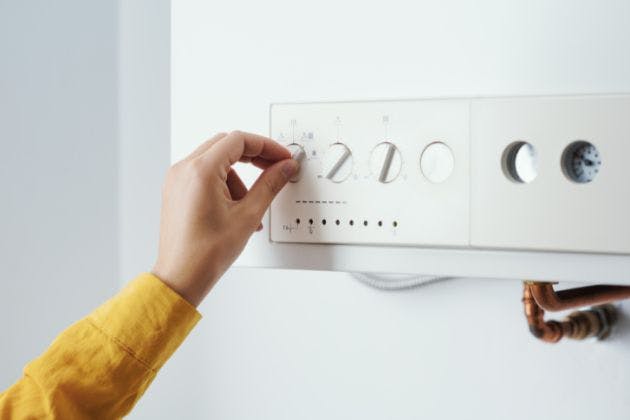
What boiler kettling noise actually is
"Kettling" is the term engineers use for loud rumbling, bubbling or whistling sounds from a boiler. It usually happens when water inside the boiler starts to overheat and boil in localised spots, rather than heating smoothly.
This often comes from restricted water flow or a build-up of limescale and sludge on the heat exchanger. Hot spots form, water boils, turns to steam and collapses back into water, creating that familiar rumbling or banging noise.
Over time, kettling can reduce efficiency, put extra stress on components and increase the risk of breakdowns. So it is important not to ignore it, even if the heating still seems to work.
Main causes of a kettling boiler
Several different issues can lead to kettling, and more than one can be present at the same time. Common causes include:
Limescale on the heat exchanger is restricting water flow and creating hot spots
Sludge build-up from rust and debris collecting in radiators and pipework
Pump problems are reducing the circulation speed through the boiler
Partially closed valves on radiators or the heating circuit are choking the flow
Incorrect system flow settings or poor system design are causing overheating
In hard water areas around Southampton, Portsmouth and Basingstoke, limescale on the heat exchanger is especially common. In other homes, thick black sludge from corroded radiators is the main culprit.
Scale on the heat exchanger
Limescale forms where hot water meets metal, much like the inside of a kettle. In a boiler, it coats the heat exchanger and narrows the water channels. The boiler then has to work harder to push water through, which can cause overheating and kettling.
This not only makes the boiler noisier but can significantly increase gas usage, as heat struggles to transfer into the water efficiently.
Sludge and flow restrictions
Sludge is a thick, dark deposit that builds up in radiators and pipework over time. As it gathers, it reduces circulation and can block key parts of the system, including the heat exchanger.
Similarly, a failing or incorrectly set pump or valves that are partly closed will slow the flow. When water moves too slowly through a hot boiler, it is far more likely to boil in patches and produce that kettling sound.
What you can safely check right now
There are a few simple checks you can make without tools and without opening anything inside the boiler. If you are unsure at any point, stop and call a professional.
Safe checks you can carry out include:
Check the system pressure on the boiler gauge, usually on the front. When cold, most systems should be around 1 to 1.5 bar. If it is very low or keeps dropping, you need an engineer to investigate.
Make sure radiator valves are open, especially any that have recently been turned down. Closing too many radiators can restrict flow and trigger kettling.
Note when the noise happens: only when you run hot water, only with heating on, or both. This helps your engineer narrow down the cause.
Avoid repeatedly resetting the boiler. One reset after an obvious issue like a brief power cut is fine, but regular resets to “force” it back on can be unsafe and may damage components.
Do not take the boiler casing off, poke around inside, or add chemicals yourself unless you are qualified and the manufacturer allows this. Gas appliances should only be worked on by a Gas Safe registered engineer.
Choosing the right fix: clean, flush or repair?
The best solution depends on what is actually causing the kettling. Your engineer will carry out checks, but as a guide, you can think of it like a simple decision tree.
When a chemical clean may help
If the kettling is fairly recent, the system water is not too dirty, and tests suggest light scale or mild sludge in the boiler, a targeted chemical clean can sometimes be enough. This uses specialist cleaning chemicals circulated through the system for a controlled period.
It is less aggressive than a full powerflush and can be ideal where the main issue is scale in the heat exchanger or light debris, with otherwise healthy pipework and radiators.
When a powerflush is appropriate
A powerflush is a more thorough clean, using a powerful pump and chemicals to move sludge through the system and out to a filter. It is usually recommended when radiators are cold at the bottom, the system water is very dark or gritty, and kettling has been going on for a long time.
Your engineer may suggest a powerflush if multiple radiators are affected, there are repeated circulation problems, or the boiler has suffered due to years of neglected maintenance. It is not suitable for every system, especially very old or fragile pipework, so professional assessment is important.
When repair or part replacement is needed
If the heat exchanger is badly scaled or damaged, or the pump is failing, cleaning alone may not be enough. In these cases, replacement parts are often the most reliable fix.
Signs that repair or replacement may be needed include noisy or seized pumps, ongoing kettling after proper cleaning, frequent lockouts, and visible leaks or corrosion. Your engineer should explain the options, costs and whether a repair is sensible compared with the age and condition of the boiler.
Hard water, prevention and looking after your boiler
Southampton, Portsmouth and Basingstoke all have relatively hard water, which means limescale can build up quickly inside boilers and hot water systems. Prevention is usually far cheaper than major repairs later on.
Good preventative measures include using a suitable system filter on the heating circuit, keeping corrosion inhibitor levels topped up, and having an annual boiler service. In some homes, a scale reducer on the cold mains supply to the boiler is also worthwhile.
Regular servicing allows a Gas Safe engineer to catch early signs of kettling, test water quality, clean key components and check system settings before problems escalate.
Next steps if your boiler is kettling
If your boiler in the Southampton, Portsmouth or Basingstoke area is rumbling or whistling, do not ignore it or keep hitting reset. Note the symptoms, carry out the simple checks above and then speak to an expert.
T P Watts Plumbing Services Ltd can diagnose the cause of kettling, advise whether you need boiler repairs, a thorough boiler service or powerflushing, and help protect your system against future problems. To book a visit or talk through the noise your boiler is making, call T P Watts Plumbing Services Ltd on 02380601566.